
Total Mobility or Partial Immobility?
Total Mobility is Aotearoa's subsidised taxi scheme for people with disabilities. But its name is an oxymoron and proposed changes will only make this worse. Read on for more:

What is Total Mobility?
According to the govt.nz website:
“The Total Mobility scheme provides subsidised door-to-door taxi services for people who cannot use public transport due to a disability. It’s funded in partnership by local and central government.1”
It provides:
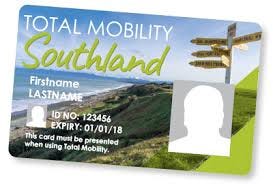
electronic cards or vouchers to eligible scheme members that subsidise the normal transport fare by 75% up to a maximum fare (set by the relevant regional council, or Auckland Transport)
funding to scheme providers to help purchase and install wheelchair hoists
payment to the owner of the wheelchair accessible vehicle for each Total Mobility scheme member who requires the use of a wheelchair hoist or ramp on a trip2.

To qualify for the Total Mobility Scheme, applicants are referred to an appropriate Total Mobility agency to undergo an eligibility assessment based on nationally established criteria.
An eligible person must have an impairment that prevents them from undertaking any one or more of the following five components of a journey unaccompanied, on a bus, train or ferry in a safe and dignified manner:
Getting to the place from where the transport departs
Getting onto the transport
Riding securely
Getting off the transport
Getting to the destination3
There are around 120,000 registered users of Total Mobility in Aotearoa who between them made 2.6 million Total Mobility trips in the 2023/2024 financial year4
Its intention is noble - to support disabled people to live good lives by providing subsidised taxi services, including wheelchair hoist equipped taxis where required, to get people with disabilities to the places they want and need to go. As such, it promotes social inclusion and equity.
But the reality is less noble. It is administered by regional councils (and Auckland Transport in Auckland) who set regional subsidy caps and its availability varies wildly across the motu from reasonably good to reasonably awful, depending on the region. Generally speaking, cities and large towns offer Total Mobility. But the smaller the town and the more remote the location, the less the likelihood that Total Mobility will be available. And being smaller towns, the available of wheelchair accessible vehicles is very limited.
Total Mobility fares are subsidised from a combination of Crown, National Land Transport Fund and public transport authority funding from regional council rates.
The Crown’s contribution to Total Mobility funding started in 2022 to help with the rising cost of living. This additional Crown subsidy is known as Community Connect. It halved existing user fares for Total Mobility and public transport concessions for Community Services Card holders.
With this additional funding Total Mobility users have only been paying 25% of the fare, up to the regional fare cap (see below). Total Mobility trips and costs increased a lot after the additional Crown subsidy was introduced in 2022. This has placed pressure on available funding to provide Total Mobility.
And the maximum fare subsidy is set by individual regions. This varies from a high of $60 in Auckland and Wellington to a low of just $9 in Te Tairāwhiti/ Gisborne, one of the most deprived regions in Aotearoa. In general, waiting time is not eligible for subsidy and Total Mobility users must meet the full cost above the maximum cap.
The situation is significantly better for those people with disabilities who can use conventional public transport. For example, Bay of Plenty offers free public transport for people with disabilities while most regions offer discounts over full adult fares. In Auckland, people with disabilities get a 40% discount over adult fares which increases to 50% for people eligible for a Community Services card for low income people, including recipients of government income support and NZ Superannuation. So you’re much better off if you’re not too disabled, which strikes me as a tad unfair.
So what appears at first glance to be an equitable scheme providing dignified access across the motu for people with disabilities, the reality once the curtain is drawn back is rather more sobering.
But wait there’s more
So Total Mobility is a postcode lottery with people with disabilities having the limits of their affordable mobility determined by their place of residence. This is exacerbated by low employment participation and high dependence on government income support among people with disabilities. But the scheme in its current form is being reviewed by the Ministry of Transport/ Te Manatū Waka due to Government concerns about its affordability.
Some changes have already been announced by Government from 1 July 2026:
The subsidy a Total Mobility user will receive for trips will reduce from 75% to 65%. This will mean Total Mobility users go from paying 25% of the fare to 35%.
Regional fare caps will also reduce by around 10% nationally. For Total Mobility users, this will mean they have to pay more of fares that are over the cap.
The reduced cost to the Crown from the above changes will be used to support public transport authorities’ costs, meaning the changes will be cost neutral to the Government5.
There are several additional proposals in the Government discussion document, together with my thoughts on each one.
Proposal 1: Set a clear purpose statement
The current purpose statement from NZ Transport Agency/ Waka Kotahi is:
“assist eligible people, with long term impairments to access appropriate transport to meet their daily needs and enhance their community participation.”
I’m not sure that this needs changing.
Proposal 2: Make the Total Mobility assessment fairer and more consistent
There is already nationally consistent criteria for assessing access to the Total Mobility scheme around all of the elements of a public transport journey. As the Human Rights Commission enquiry into accessible land transport found, a public transport journey is not accessible if a single element, such as the lack of a pram crossing for wheelchairs, is not accessible.
Proposal 2A: Introducing evidence requirements as part of the assessment process
This makes it sounds like the current process doesn't require evidence of permanent disability, although there is benefit in nationally consistent guidance so long as this isn’t a backdoor attempt to further ration access.
Proposal 2B: Introducing periodic reassessments to keep receiving Total Mobility support
In general, Total Mobility is for people with long-term, often lifelong disabilities, not temporary impairments so this just seems like an unnecessary barrier to access. Especially given the strong financial incentives to use conventional public transport. And this is different to drivers licences which last a lifetime, even though road rules can and do change significantly over time.
Proposal 3: Introduce caps on trips based on level of need and circumstances
This smacks of considering some trips worthy and others not worthy. Which does not line up with Whaikaha/ Ministry of Disabled People’s statement that:
“We focus on things that make a tangible difference to disabled people, tāngata whaikaha Māori, and their families and whānau, whether that means working with partners to get more people into employment or making New Zealand more accessible.6”
Proposal 4: Incentivise Total Mobility providers to provide more wheelchair accessible vehicle trips
There are significant financial and other barriers to Total Mobility providers providing and increasing the supply of wheelchair accessible vehicles so assistance with addressing these barriers is welcome.
Proposal 5: Enabling new Total Mobility service providers to enter the scheme
On the face of it, enabling community transport and on demand transport providers as well as rideshare companies to participate in Total Mobility has merit, so long as it’s not a backdoor to reducing costs to the extent that it makes it uneconomic to provide Total Mobility, particularly with wheelchair accessible vehicles, in smaller centres.
Proposal 6: Introduce a national public transport concession for people with disabilities
Motu Move is a ticketing and payment system providing easy, consistent ways to pay, either with a Motu Move card or contactless payment through debit and credit cards and mobile wallets, for buses, trains and ferries across Aotearoa. It is due to complete its roll out at the end of 2027, starting in Christchurch in mid-2026. One of its challenges is the hodge podge of fare concessions and fare structures across the motu. So having a single accessible public transport concession has merit but, depending on the level it is set at, this could disadvantage users in regions with a higher disability concession level or free travel for people with disabilities as in the Bay of Plenty.
Final thoughts
As Brent Toderian says “The truth about a city’s aspirations isn’t found it its vision. It’s found in its budget.”

And the same applies to nations. According to Radio New Zealand, the cost of the Roads of National Significance programme has increased by $5 billion in the past two years and is now in the range of $44 billion to $54 billion7. In 2020/21, the total subsidy for all Total Mobility users across the motu was $20.2m, and in 2024/25 it was $68.8m - that’s a $48.6m increase in five years. While that’s a big-ish number, it’s in the millions, not the billions of the Roads of National Significance. As D-List points out8, the Total Mobility Scheme supports every single priority of the New Zealand Disability Strategy of enabling good lives as well as helping meet Aotearoa’s obligations under the United Nations Convention on the Rights of Persons with Disabilities.
They say that the quality of a Government is represented in how its treats its most vulnerable citizens. And people with disabilities are among the most vulnerable in Aotearoa. They experience a huge range of barriers in their lives. So much so that it would be very difficult for able-bodied people to wrap their heads around them. Surely, it’s not too much to ask to enable affordable mobility for activities that able-bodied people absolutely take for granted.
Feedback is open on the Total Mobility Discussion document until 22 March 2026 by:
making a submission using the online form
using the Feedback form and sending it by email or post to:
Total Mobility Consultation
Ministry of Transport
PO Box 3175
Wellington 6140
Total Mobility Scheme on govt.nz accessed on 17 February 2025
Total mobility around New Zealand: A regional guide to using the Total Mobility scheme version 1.4, New Zealand Transport Agency/ Waka Kotahi, August 2025
Total Mobility information from the Marlborough District Council website
Total Mobility Scheme: Proposals to Strengthen the Scheme, Ministry of Transport/ Te Manatū Waka, December 2025, page 3
Ibid, page 4
Whaikaha/ Ministry of Disabled People website, accessed on 17th February 2026
Tens of billions: Why the bill for planned Roads of National Significance keeps going up, Radio New Zealand, 4 November 2025
The Total Mobility Scheme is a success. Why on earth would the Government want to cut it? D-List, 13 August 2025
Thank you for this thorough and thoughtful dissection of the changes to the Total Mobility Scheme.