


Opening thoughts
Tāmaki Makaurau/ Auckland is the city that non-Aucklanders love to hate (or is it hate to love?). And as us JAFAs1 (yes, I am sorry to inform you that I’m an out and proud JAFA) like to say, we are Aotearoa/ New Zealand’s only city of international scale. Like it or loathe it, the city produces a third of New Zealand’s gross domestic product and around 40 per cent of the nation’s tax take. It seems that you can’t live with Auckland and you can’t live without Auckland.
The bad old days
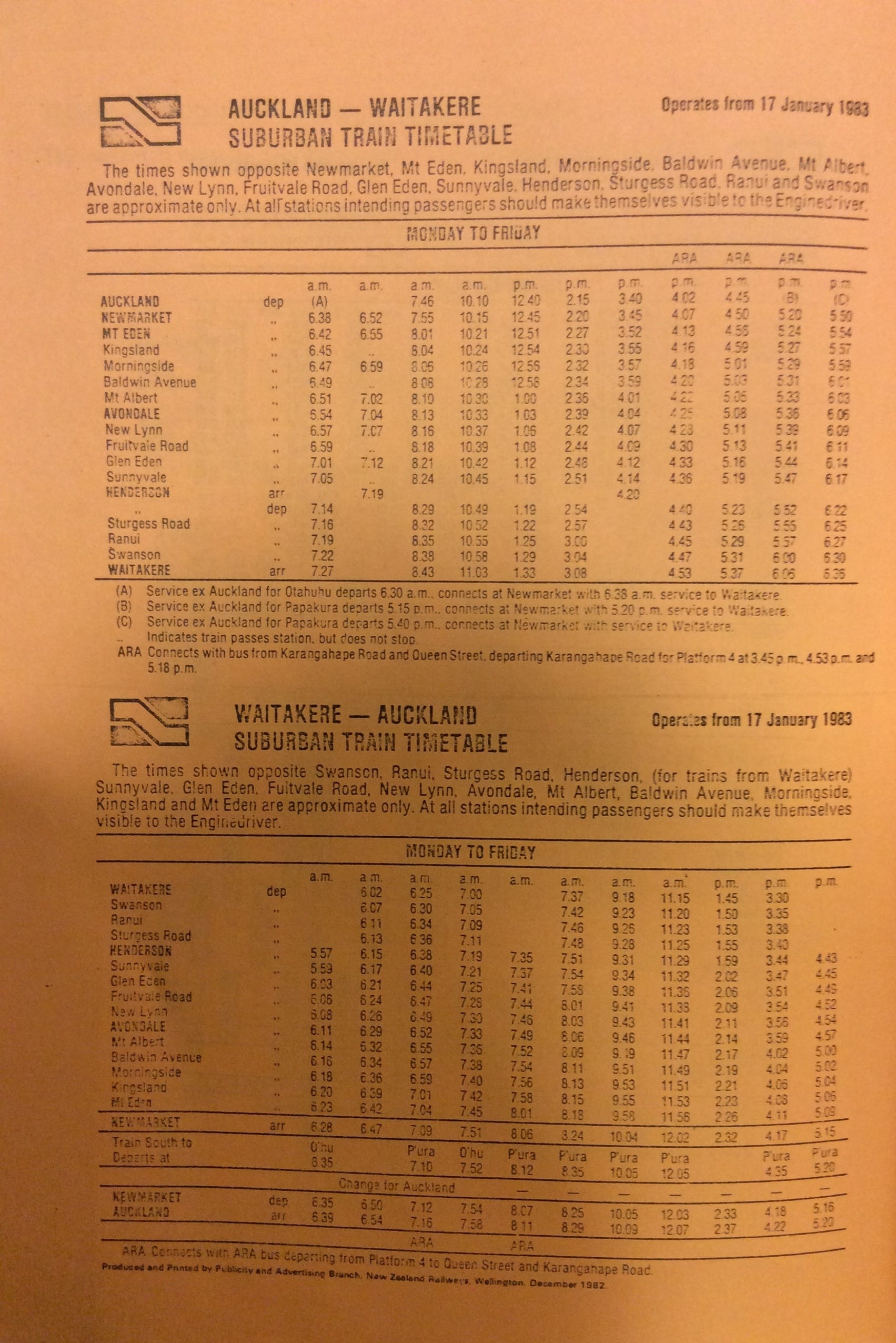
Anyway, Auckland has turned around its public transport network in the past quarter century from global laughing stock to one of best designed (if not yet the most used) public transport networks in Australasia. Back in the day, things were so bad that Auckland’s rail network carried just over one million people in the entirety of 1992, something that Sydney does in a day, and Tokyo does in a few hours. The rail network was being set up to be shut down. So it’s a very long journey from the bad old days to the turn-up-and-go rail network of City Rail Link, tightly integrated with a vastly improved bus network. Auckland is one of a very small group of cities in the Anglosphere to create rapid transit from scratch. This is no mean feat.
The turnaround
The turnaround was not a single moment in time nor a single project but a whole pile of effort by a whole pile of people each individually wanting to make a difference to public transport and collectively making a big difference.
But some key moments are worth reflecting on in the lead up to City Rail Link opening.
1993 - The Perth Rail Deal. The deal masterminded by the late Raymond Siddalls in 1993 to buy Perth’s cast-off diesel multiple units for Auckland when that city electrified its rail network undoubtedly saved Auckland’s rail network from being buried with barely a trace. It’s much harder to start a service from scratch, as Te Huia’s 10-year journey before startup attests, than to improve something existing.
2003 - Britomart (now Waitematā) Station. Auckland City Council, pre-dating the Super City, funded the vast majority of the $204 million cost of the bringing rail back to Auckland City Centre, with only a $20 million central government contribution from Transfund (now part of NZ Transport Agency Waka Kotahi). The station itself is a masterpiece of repurposing a heritage building and significantly elevated the public transport arrival experience. Mario Madayag as its architect deserves huge kudos for this.
2006-2012. Project DART (Developing Auckland’s Rail Transport). This was the core rail network upgrade including double tracking the Western Line to Swanson, including trenching rail in New Lynn; reopening the Onehunga Line to passenger service; building the Manukau rail line and station and a major upgrade of Newmarket Station.
2008 - Northern Busway. While hardly a shining example of transit oriented development, it is a major public transport success story and means that we could put off for 20 years having yet another conversation about an additional Waitematā Harbour crossing. It is also a great demonstration that it is the quality of service provided rather than the mode per se that is the most important element in successful public transport.
2014-2015 - Rail electrification. Electrifying 75 kilometres of track (recently extended by 18 kilometres from Papakura to Pukekohe) may not sound like much but it brought Auckland’s rail network from the 20th century of diesel multiple units and diesel locomotive hauled passenger carriages into a 21st century electrified rail network with state of the art electric multiple units. And it was an indispensable prerequisite for City Rail Link.
2016- 2018 - New Network for Public Transport. This first principles review of the entire Auckland bus network turned a 1970s era resource-driven “network” of slow, indirect, infrequent, non-clock face timetable bus services - in what I termed the “spaghetti thrown at the map” network - into a modern hub and spoke network built around a core of frequent radial and crosstown bus services across all of Auckland. The largely unsung architect of this transformation was Anthony Cross, who shepherded the whole project through Auckland Transport, taking stakeholders and elected members on the journey. City Rail Link will be all the more successful because it’s backed by an integrated bus network that feeds to and from rail, not competes with it.
2022 - the Auckland Council Climate Action Transport Targeted Rate provides $573 million in funding over 10 years. Together with central government co-funding of $344 million and with fare revenue, it supports a $1.045 billion investment in buses, ferries, walking and cycling, including a further major expansion of the frequent transit network with services at least every 15 minutes, 7am to 7pm seven days a week (and less often at other times).
2026 - City Rail Link. As the Mainland Cheese ad says, good things take time. And this project was a century in the making from first proposal to final delivery. But it will have a major impact on the city for the next century and more.
Auckland ponies up the cash
While there may be a perception out there that Auckland likes nothing more than sucking on the central government public subsidy tit, the truth is somewhat different.
To give a few examples from the list above:
Britomart Station - Auckland - $184 million; Government - $20 million
Rail electrification - Auckland ≈ $440 million; Government share ≈$660 million2
Transport Targeted Rate - Auckland - $573 million; Government share - $344 million
City Rail Link - Auckland - $2.7 billion; Government share - $2.7 billion
Just for these four items, Auckland ponied up just under $4 billion. And for ongoing public transport operational expenditure Auckland, like other large cities, pays for roughly half of all public transport service investments while smaller centres typically get a higher share of funding from central government.
Final thoughts
There are a few key takeouts from Auckland’s enormous public transport development over the past quarter century.
A willingness to acknowledge past failures and take decisive action to address those failures.
A willingness to think big and invest Auckland money at significant scale to address the challenges. Ambition meets funding to match the ambition.
The self-confidence to advocate for ongoing significant investment in public transport, backed by local co-investment.
Auckland’s self-confidence and ambition is sometimes mistaken for arrogance. And while us Aucklanders can at times enjoy watching the sunshine emerging from our posterior, the city is prepared to put its money where its ambition is.
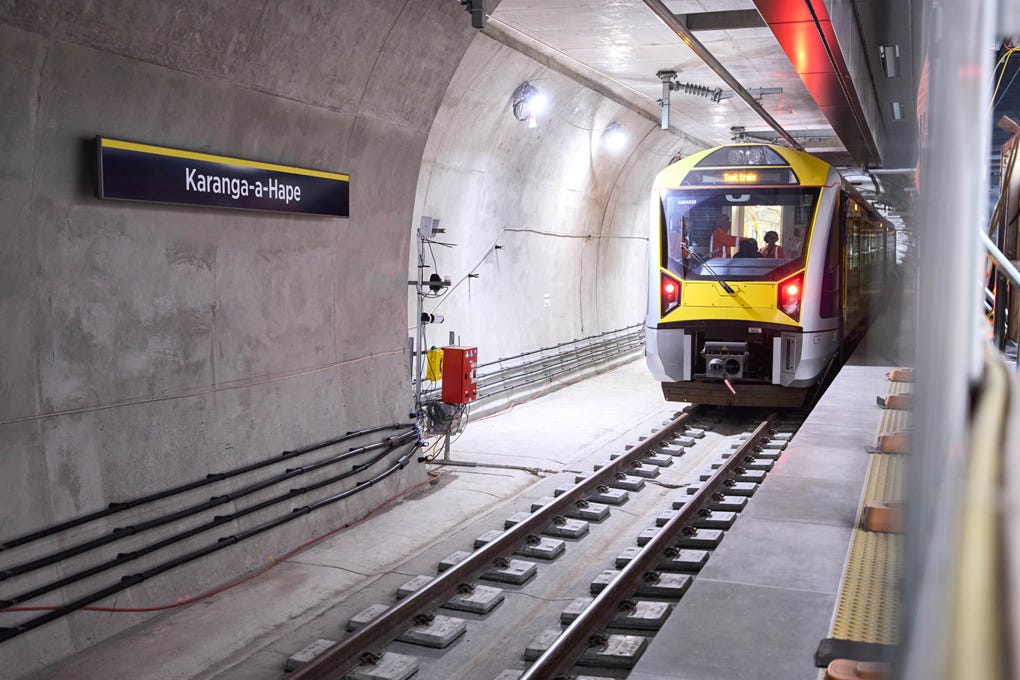
City Rail Link is the culmination of a long period of public transport development where the city has built very solid foundations, in terms of a solid bus network including 47 frequent bus routes, as well as an emerging focus of growth around areas with good public transport. Perfect the city is not but Auckland is a city well on its way to being great. And City Rail Link is just the next stage in that journey.
JAFA = Just Another Fucking Aucklander, a rather unkind epithet for Auckland from non-Aucklanders.
This is an underestimation of Auckland’s share as the central government funding assistance rate for rail infrastructure dropped in steps from 60 per cent to 50 per cent in this period
Great history, thanks Darren!
A great description of Auckland's urban public transport renaissance. With the recent stories of City Rail Link's construction and imminent opening, I wondered why I hadn't read much at all of Auckland's urban rail. You've aptly provided the answer. Cheers.